The Glare Between the Hedgerows: Sporty Shades for Winter Driving
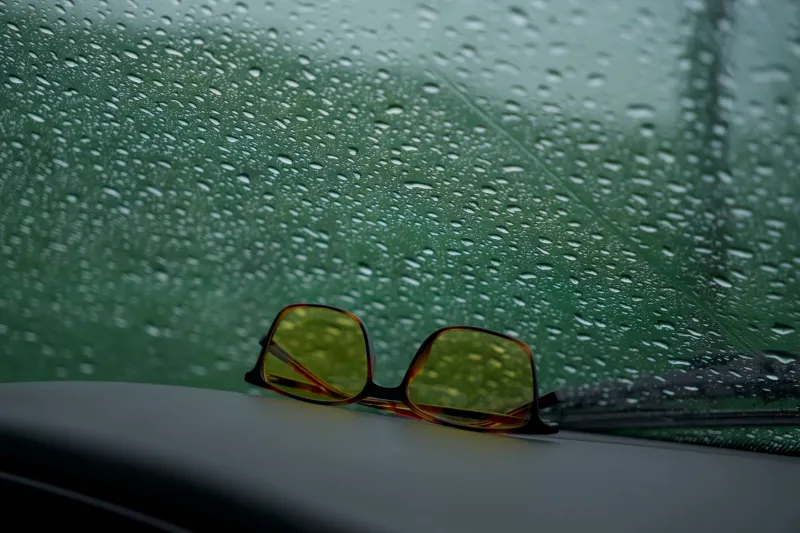
On a bright November morning, the sun does not so much rise as slide sideways across the windscreen. It sits under the visor, bounces off wet tarmac and turns every smear on the glass into a small private sunset. That is the winter driving blind spot: not darkness, but low, sharp, reflective light arriving exactly when the school run, the commute and the weekend trip to the garden centre all overlap.
Sporty shades have a role here. Not because they are a magic fix, and certainly not because a pair of wrap frames excuses a grimy windscreen, but because the right lens and fit can take the edge off the worst of it. The trick is choosing for driving rather than for the beach.
Why winter glare is a different beast
Summer sun is high and obvious. Winter sun is low, long and sneaky. It comes through the side window, across wet paintwork, off puddles and over the bonnet of the car in front. Add a windscreen coated in the fine film that British roads produce in damp weather and you get a double problem: direct glare from the sun and reflected glare from the road.
A very dark lens can make the first problem feel better while making the second one worse. If the road surface goes flat and grey, you lose the detail you actually need — kerbs, potholes, cyclists, the edge of a narrowing lane. That is why the conversation should start with lens behaviour, not just tint depth.
Polarised or contrast? The real trade-off
Polarised lenses are the obvious answer to reflected glare. They cut the horizontal light that bounces off wet tarmac, standing water and shiny car bodies, which can make a motorway drive in drizzle feel noticeably calmer. For many drivers, that alone justifies a dedicated pair.
But polarisation has quirks. It can interact with LCD dashboards, head-up displays and some phone screens, making them look blank or strange at certain angles. It can also make certain tinted windows or reflective surfaces behave oddly. None of that is dangerous in itself, but it is worth checking before you rely on a pair for the first time on a dark morning.
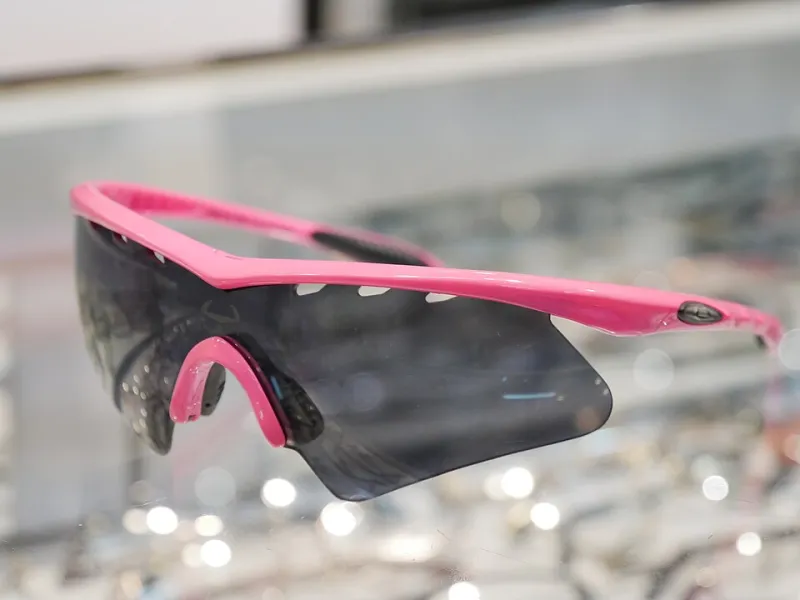
Contrast lenses are the other useful tool. Rose, copper and amber-tinted lenses boost definition in flat, grey light, helping kerbs and road edges stand out when the sky is doing its best impression of a damp dishcloth. They are less effective against full-on low sun than a polarised lens, but they can be kinder for dawn and dusk. Oakley-style sporty frames often use this kind of contrast-enhancing tint, and the principle matters more than the logo on the temple.
For a winter driving pair, think about your usual routes. If you spend most of your time on wet motorways and exposed A-roads, polarised makes sense. If your drive is a slow, shaded town route with lots of junctions, a contrast lens may be the more useful companion.
Light transmission, the law and common sense
There is no single UK statute that sets one minimum visible light transmission figure for all driving shades, but the practical and legal test is simple: you must be able to see clearly. Category 4 lenses — the very dark ones sold for high-mountain and glacier use — are not suitable for driving. Category 3 is a daytime driving lens at best; category 2 is more flexible; category 0 and 1 are for low light rather than bright winter sun.
That matters most at the edges of the day. A pair that feels fine at 11am can be a liability at 4pm when the light is fading and the road is wet. If you wear prescription shades, make sure the prescription is right for driving and that the frame does not sit so close that it fogs or crowds your view. And if a lens feels too dark to read the road, it is too dark, whatever the label says.
Fit around visors, mirrors and dashboard reflections
Driving is a fit problem as much as a lens problem. Thick sports temples can clash with a pulled-down sun visor. A very wide wrap frame can crowd the door pillar when you check your blind spot. A frame that sits too low can catch the top of the dashboard in your line of sight.
Look for a close, stable fit that does not press on the temples or slide down when you glance over your shoulder. A backside anti-reflective coating is a small but genuinely useful detail: it reduces the reflection of your own face and the dashboard behind you. Polarised lenses can sometimes make dashboard reflections more obvious at a particular angle, so test that before you commit. Keep a microfibre cloth in the car and use it on the lenses, not your sleeve.
Build a dedicated driving pair
Your running shades and your driving shades do not have to be the same pair. A dedicated car pair can live in a hard case in the door pocket, with a spare microfibre and a sensible lens choice for the season. Avoid leaving them loose in the glovebox where they can scratch against keys, coins and the inevitable emergency biscuit.
For winter 2026, a useful two-lens approach is a contrast lens for grey, flat mornings and a polarised lens for wet, reflective daytime drives. If you only want one pair, choose the one that suits the light you actually drive in most often, not the one that looks best in a photograph.
The pre-drive checklist
- Clean the windscreen inside and out. Low sun finds every smear.
- Check washer fluid and wipers before the cold snap, not during it.
- Clean your lenses with a proper cloth; a dry sleeve is a scratch waiting to happen.
- Check the lens category and make sure you can see the road clearly.
- Put your shades on before you move off, then adjust the visor around them.
- If your lenses are polarised, glance at the dashboard and any head-up display before setting off.
- Keep a spare pair in the car, ideally in a case.
- Do not wear very dark lenses at dusk, dawn or in heavy rain just because they are already on your face.
Winter driving glare is a seasonal fact of British life. The right sporty shades will not change the weather, but they can make the low sun feel less like a daily ambush and more like something you planned for.